In What Language Should We Write Our Literature for Children?
This question is raised from time to time in our age whenever discussions arise about backwardness and progress, development and modernity. It is raised by the educated elite, whose concern is to investigate the reasons that hinder the progress of the Arab and Islamic nation. It is also raised by writers, particularly those who write for children, because direct communication with children takes place through language. Is it permissible to connect this issue with what was narrated in the past or with what is being written today? Parents also raise this question, as they wish their children to master the Arabic language; indeed, they aspire for their children to master other languages as well. This question does not seem likely to disappear, primarily because of its connection to Arab identity on the one hand. Arabs find in the idea of language a source of cohesion among Arab peoples. On the other hand, it is connected to one of the ways of preserving the strength of religion. Language has therefore become a civilizational issue. Does progress begin with language, or does it emerge from other sources? Accordingly, we find ourselves compelled to address another issue related to identity and religion. If we, as writers, wish to tell stories or compose poetry, what language can we use to communicate with children who all belong to the Arab environment? As we know, this environment is internally cohesive, yet externally diverse. By “external” here, I mean the forms of linguistic communication used in these environments through different dialects. If I write a story in the Moroccan dialect, for example, will its semantic message be understood in the Egyptian environment? The same can be said of other dialects, which may be clear and accessible at times but obscure on many occasions. If we write children’s literature in the Egyptian or Moroccan dialect, does this affect identity and religion? Whether we like it or not, the answer is that the widespread circulation of literature written in one dialect or another among children—who represent the rising generation, the generation expected to assume responsibility for managing society for decades to come—at a time of competition among languages for prevalence and global reach, will in one way or another contribute to weakening the cohesion and solidarity among the peoples of the Arab nation. The Arabic language is therefore a fundamental element in achieving cohesion among Arab peoples. The strength that emerges from this cohesion gives our language a global legitimacy and grants it the right to compete with other languages. Some may argue that ours is an age of rapid development, an age in which everything human beings use is becoming easier and more accessible. Yet development does not, under any circumstances, mean severing our connection with the language inherited from our ancestors—the language of identity and religion—on the pretext that communication cannot be achieved through unfamiliar or difficult words. There is no doubt about the importance of accessibility. However, moving from obscurity to simplicity does not mean reducing language to a naïve or superficial form, to the point of legitimizing the teaching of sciences and literary forms to students in dialects on the grounds that they find it difficult to absorb knowledge through Modern Standard Arabic. If such an approach were to spread into specialized fields—in schools and universities, where the use of formal Arabic is required—why not apply the same principle to the languages we seek to learn in order to use them in professions and occupations? Advocates of this approach seem to take an extreme position, because replacing the official language—the language of heritage, identity, and religion—with a dialect inevitably raises a profound human question: the Arab individual's connection to existence as a struggle to affirm distinction through language. Any separation from the language is a separation from participation in this global linguistic struggle. This struggle should not, however, take place between Modern Standard Arabic and dialects, because it may generate problems that we do not want to release from the confines in which they are contained. Such problems could enter another arena: the political sphere. There, they could become a vehicle exploited by those who are neither specialists nor knowledgeable about language, turning language into a means of achieving a utilitarian objective. This is what happens in several Arab countries. One example is the adoption of Arabization for scientific subjects, followed later by their Francization. If we examine the efforts made by each side to defend its position, we find that the intellectual effort devoted to this conflict has produced no outcome that benefits the Arab nation. Even more troubling is that one may find someone who previously defended Arabization later becoming an advocate of Francization or Anglicization. We may conclude from this that political conflict cannot resolve linguistic dilemmas because it pursues a utilitarian purpose that serves self-interest rather than the interests of the language itself. This problem—which appears to be an artificial one, as we seek to demonstrate—leads us to understand what is meant by facilitating and simplifying the language through which we communicate in formal contexts, since outside such contexts we use the dialect to which we belong. Facilitation and simplification, as explained by modern Arab linguists such as Al-Maraghi, Khalifa Al-Tunisi, Taha Hussein, and Al-Aqqad, involve reconsidering the rules upon which the language is founded. We should not expect a child to grasp the complexities arising from a particular linguistic phenomenon simply because different grammatical theories, debates, and opinions have developed around it. These emerged from the linguistic disputes among the grammatical schools—the Basran and Kufan schools, and even the Maghrebi-Andalusian school, represented by Ibn Mada’ al-Qurtubi. Such disputes produced differences concerning a single grammatical issue, such as whether ma functions grammatically or not, whether all grammatical case endings may be permitted in a particular construction—sometimes based on linguistic usage and at other times on analogy—and the relationship between governing elements and the words they govern. Limiting instruction to the grammatical rules that are most commonly used among people, while reinforcing them through the literature and educational materials directed at younger generations, is sufficient to cultivate a generation that loves its language, its grammar, its poetry, its stories, its inherited sayings, and its proverbs. This is similar to what we do when establishing the basic rules of other languages and familiarizing ourselves with their cultures. How can we expect younger generations to master their language if they are not connected to the Arab culture in whose cradle that language developed? How can they understand the subtleties of Arabic without reading historical works, books of tales, legends and myths, poetic compositions, and accounts of kings, caliphs, writers, and poets? If, for example, we read the biography of Imru’ al-Qays, or explore the life and works of Abu Hayyan al-Tawhidi or Al-Jahiz, would we not thereby enter the world of the Arabic language through the widest possible gateway? If we take into account that mastery of language ultimately leads to mastery of grammar—a subject from which our younger generations tend to shy away—we may conclude that learning linguistic rules begins with reading literary works. Within this context, which is witnessing international struggles over languages, this does not in any way imply a desire to destroy any language, because a language dies only when its speakers die. On this basis, the Arabic language will neither disappear nor cease to be used, even in informal contexts, because of the need for simplicity, nor because our age may compel languages to abandon many of their essential features, nor because of excessive reliance on forms of communication through social media. These developments have produced a new form of writing that has spread across these platforms, relying on Latin letters, numbers, and symbols to convey meaning. The matter has even gone further, with people economizing on language by using certain letters instead of constructing complete sentences. Should we therefore say that this constitutes a threat to the Arabic language? Such concern is understandable. Yet alongside these forms of superficial simplification, we find an opposing approach: expression through eloquent sentences and texts that are free from unnecessary verbal and conceptual complexity. Languages face challenges every day, but the fate of any language necessarily involves this tension between failure and success, and between destruction and construction. But what does all this have to do with children’s literature and storybooks? The connection is indeed necessary, given that publishing houses in the Arab world vary in their approaches. Some specialize in publishing traditional heritage stories; others publish translations, thereby opening the door to world literature; some publish in local dialects; while others publish in Modern Standard Arabic. There is therefore a difference in the ways literature is delivered to Arab children at the linguistic level. But can this difference provide us with a smooth entry into the world of progress and modernity at the cultural level? The answer is that publishing literature for children in the Arab world in local dialects, on the pretext of presenting meaning “on a silver platter,” as the saying goes, or adopting an approach of simplification, is in reality an accumulation of yet another crisis on top of the many crises facing the Arab world. Where, then, does the solution to this crisis lie? Change does not usually take place within language itself, as though language were merely a dictionary from which we select whatever words we wish in order to express our ideas, with each idea having its own particular language. Rather, change takes place at the level of style—in the ways we use the language while maintaining its formal structure, constructing meanings that can be understood by both specialists and the general public. The language in which we write is no different from music to which we listen attentively for its melodies. What do we understand from this? We understand that constructing sentences in Modern Standard Arabic can achieve the very purpose that we seek to achieve through dialects.
Al-Hassan Benmouna / Morocco
Read More
The Journey of a Children’s Book Illustrator
It is a journey that takes us far into the worlds of imagination. Each time an artist allows themselves to float with the words, to breathe them in and become part of them, their feet rise from the ground and they find themselves gently floating, leaving behind the constraints of reality and embarking, through imagination, on a new world of lines, colors, shapes, and varying emotions. At that moment, the artist realizes that this text was written so that they could give it a part of themselves. Illustrating books in general, and children’s books in particular, is a space unrestricted by the constraints of reality. It allows every artist to be their true creative self. Swimming between and within words requires us to detach ourselves from reality and connect with our inner selves before thinking about techniques and artistic skills. We first set our imagination free and experience life as though we are seeing it for the first time, with wide-open eyes that absorb everything that touches our senses. We breathe it in and store it, allowing it to become part of our endless visual repertoire. We build towers of emotions, sensations, colors, images, and childhood memories stored in scented glass jars, releasing their fragrance whenever we encounter or see something that reminds us of them in our everyday lives. A creator of children’s books and picture books forever gathers within themselves a collection of intangible treasures that serve them throughout their creative journey. How Does an Artist Begin Illustrating Children’s Books? The artist begins by connecting their creativity with their actual technical skills and working on illustrations that represent what they love most about children’s books, whether a particular age group or a general theme that stimulates their imagination and inspires them to create with enthusiasm. In many cases, artists struggle to connect their technical abilities and the images they create with their imagination, allowing external influences and the styles of other artists to affect their confidence and their perception of their own creative work. Building a portfolio requires us to be ourselves and to allow our skills and creativity to blend naturally and confidently. Producing 8 to 12 illustrations, varying in size and level of detail, is very important in demonstrating a range of skills and techniques to publishers or literary agents. In addition, a strong portfolio gives the prospective employer confidence in the artist. When an artist begins the journey of searching for a publisher or a book to illustrate, they should always remember that the right text is out there waiting for them; they simply need to seek it out. They can begin by sharing their own work, reaching out to publishers and writers, promoting their work, practicing, and becoming part of the children’s book community through exhibitions, publishers, workshops, and professional networking. The world of children’s books is a welcoming one, with its doors open to you. All you need to do is take your artistic tools and creativity and set off on the journey.
Layal Idris – Lecturer at the University of California Children’s / Book Artist
Read More
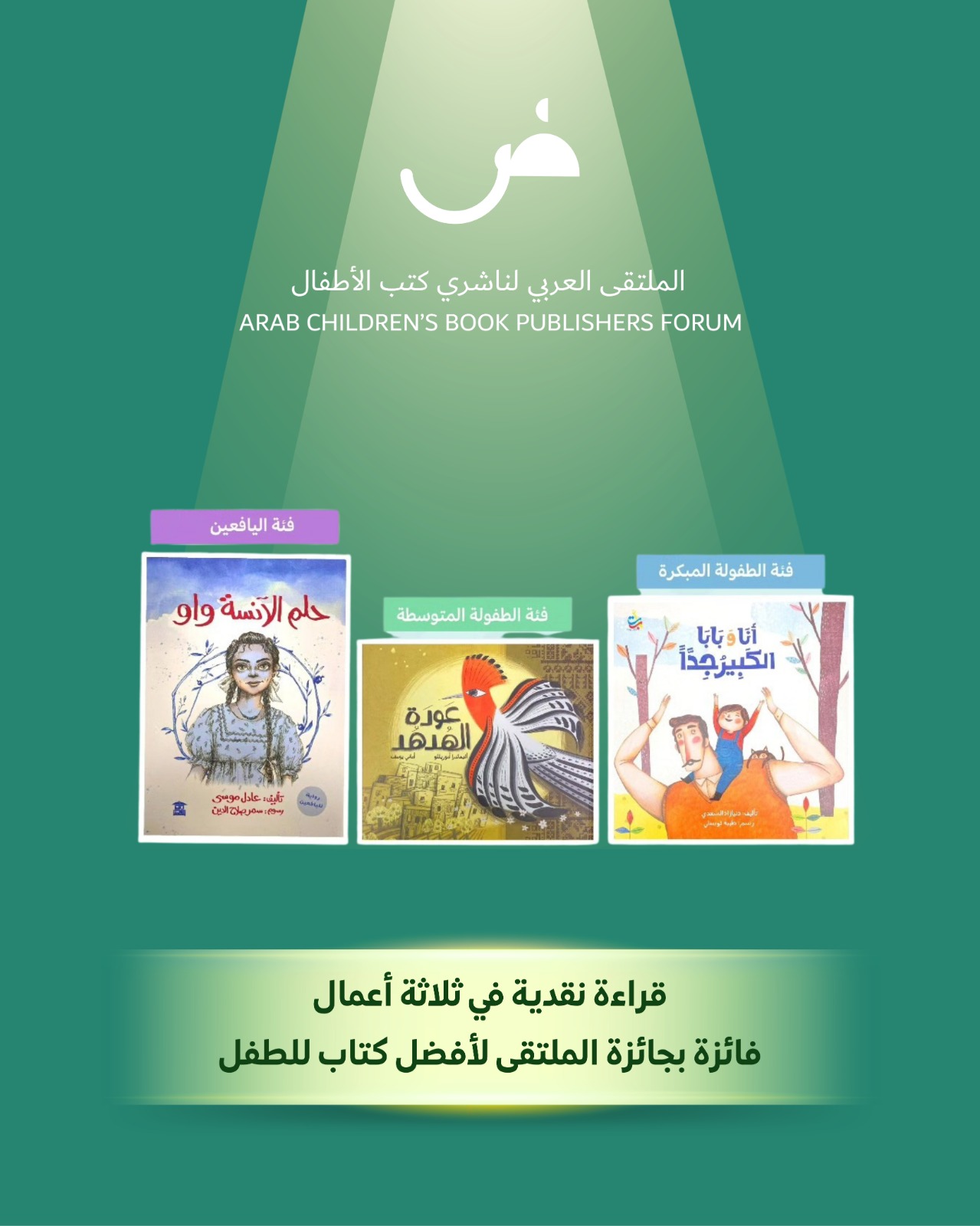
A Critical Reading of Three Award-Winning Works Honored by the Arab Forum Award for Best Children's Book
The following article presents a critical reading of three distinguished works of Arabic children's literature that have received the Arab Forum for Children's Book Publishers Award. Through these readings, the author examines themes of courage, identity, belonging, family, and hope, while offering insightful observations on narrative structure, symbolism, and literary technique. Miss Waw's Dream Miss Waw's Dream is an inspiring novel for young adults set in the community of storytellers—a simplified microcosm of society at large. Many years earlier, the elderly Chief Storyteller had decreed that woman should be forbidden from storytelling, arguing that they were incapable of bearing such a great responsibility. He also believed that women tended to invent new stories, thereby threatening the preservation of traditional tales and the storytellers' mission of safeguarding cultural heritage. According to this decree, the kitchen was the only place suitable for women. For decades, the rule remained unquestioned until the courageous Waw emerged. Inspired by her grandmother's legacy, she believed it was her right to become a storyteller. Although her parents initially tried to dissuade her, she remained steadfast. During the annual Festival of Storytellers, she openly declared her wish to the Chief Storyteller himself—a man feared and respected by everyone. The Chief first attempted to persuade her gently, insisting that storytelling was too difficult for women and incompatible with long-established traditions—traditions that he himself had created. Unmoved by his arguments, Waw purchased a rababa (a traditional one-stringed instrument) and sat in the village square to perform her very first story. Her determination placed the entire community in an uncomfortable position. The novel presents a subtle conflict between tradition and renewal, rigidity and change. Determined to test her resolve, the Chief Storyteller ordered Waw to climb the mountain alone and spend the night inside the Cave of the Covenant. He declared that if she were sincere in her purpose and dreamed of the ancient grandmother of storytellers, she would be officially recognized as one of them. Waw accepted the seemingly impossible challenge without hesitation. She spent the night alone but did not dream of the grandmother. Instead, something unexpected happened. When she descended the mountain the following morning, a star-shaped mark had appeared on her forehead—a symbol that, according to ancient tradition, had once distinguished true storytellers. The Chief Storyteller finally surrendered and proclaimed Waw a storyteller. From my perspective, however, this symbolic ending, which celebrates the rise of Waw as a new storyteller, does not entirely harmonize with the novel's otherwise realistic atmosphere. Throughout the narrative, the author relies on logical dialogue and rational argument. Waw's courage, perseverance, and unwavering commitment to her dream seem sufficient to justify her success without resorting to a supernatural sign, whether in the form of a prophetic dream or the miraculous appearance of a star. After all, her determination had already earned the support of her parents and several members of her family. Her cousin, inspired by her bravery, found the courage to reveal his own secret: he loved cooking rather than storytelling, and the delicious dishes the Chief Storyteller enjoyed every festival had always been his creations, not his mother's as everyone believed. Waw's remarkable courage—especially her lonely ascent of the mountain through darkness, cold, and solitude, carrying a heart filled with stories—was, in itself, enough to establish her as a storyteller. She did not need a miracle that might or might not occur to validate her dream. The Hoopoe's Return The Hoopoe's Return is a brief and seemingly simple story, yet it is emotionally profound and deeply moving. It addresses the themes of displacement, uprooting, exile, and the enduring hope of return. Although grounded in reality, the story is richly woven with symbolism. Ghassan is a cheerful boy who shares his secrets with an orange tree. At the same time, he carries an unspoken fear that the world around him might suddenly change. Yet the story never clearly explains what prompted this fear or what Ghassan had witnessed to make him feel this way. Although his anxiety is later justified by the events that unfold, the narrative leaves its origins unexplained. After a deafening uproar, everyone leaves the village carrying the keys to their homes. Here again, the author leaves the details to the child's imagination: What exactly happened? Why were the villagers forced to leave? While the symbolism clearly points to the events of the 1948 Palestinian Nakba, the narrative does not provide sufficient clarity for young readers unfamiliar with that historical context. Although Ghassan disappears physically from the story, his presence endures through the orange tree that patiently waits for his return. The tree symbolizes his deep roots in the land—roots that can never be severed. Its continued flourishing also embodies the enduring hope that one day he will come back. When autumn arrives, a hoopoe appears in the village. The hoopoe carries profound symbolic significance in Arab and Islamic culture. It is associated with spiritual insight and the ability to perceive truths hidden from others, recalling the Qur'anic verse in Surat An-Naml: "I have come to you from Sheba with certain news." Its arrival in the story functions as a prophecy that Ghassan's return is inevitable, reinforcing the hope already represented by the steadfast orange tree. Notably, the author writes that the trees "fell ill" rather than saying they "died." Illness implies the possibility of recovery, and this is precisely what the hoopoe brings about. Carrying seeds from tree to tree, it scatters them until the "Forgotten Hill" blossoms once again. This description evokes a forgotten cause that inevitably returns to public consciousness, no matter how much time passes. Throughout the story, the orange tree repeatedly wonders why the hoopoe chose her and why it chose the hill. The text states that the bird "continued to ignore her and flew away." In my view, the word "ignore" is not the most appropriate choice here, as it unintentionally diminishes the importance of both the tree and her questions. A gentler expression, such as "it flew away in silence," might have better preserved the story's poetic atmosphere. Everything remains hidden beneath the surface, like seeds lying dormant in the earth, until the right moment arrives. Then the Forgotten Hill blossoms, and Ghassan finally returns, now grown, holding the hand of a little girl named Lamees. Her name evokes the Arabic root meaning "touch," suggesting that the long-awaited return has finally become tangible. The child herself also symbolizes continuity, renewal, and the enduring fertility of the land. Here again, however, time is compressed, and the symbolism seems to suggest that the flourishing trees alone brought about Ghassan's return. The extensive use of symbolism may prove intellectually demanding for young readers who possess little or no knowledge of the Nakba. At the end of the book, the author explicitly refers to Ghassan Kanafani, thereby anchoring the story firmly within the Palestinian context. In my opinion, the narrative could have addressed the issue more directly, without excessive reliance on metaphor. Likewise, the symbol of the house key is inseparable from a specific historical reality—it belongs uniquely to Palestine. The story is heavily imbued with sadness. Some emotional relief might have been achieved by including a charming secret that Ghassan once shared with the orange tree, allowing the memory to resurface upon his return and gently soften the narrative's emotional weight. The language is lyrical, concise, and beautifully crafted. Descriptions such as the oranges being "golden like the stars in the sky" add poetic richness. Yet, since stars are more commonly associated with silver or white light, comparing the oranges to "golden suns" might have created a more vivid and harmonious image. Me and My Very Big Daddy This picture book is intended for children in early childhood. The word Daddy in the title immediately conveys warmth, affection, and emotional closeness, while the description "very big" reflects the child's perception of the father as a figure of strength, security, and admiration. The story follows the everyday experiences of a young child with his father. In the morning, covered in shaving foam, the father resembles a snowman—a humorous image that encourages children to observe the people around them and relate what they see to their own experiences and imagination. The father also carefully grooms himself in front of the mirror, inspiring the child to hope that one day he, too, will be neat and well-presented. As a role model, the father naturally becomes someone the child wants to imitate, and these simple daily rituals remain deeply rooted in the child's memory. When the father returns home from work carrying groceries and household necessities, his strength is shown not merely through physical power but through his dedication to caring for his family and providing for their needs. In the child's eyes, the father is much more than someone who works outside the home; he is many skilled people in one. He repairs broken chairs and leaking taps, paints the walls, and takes care of the family's belongings. Through these everyday acts, the story quietly promotes the values of responsibility, maintenance, and respect for personal property. The child also enjoys moments of play with his father, reminding readers that children's needs are emotional as well as material. Together they race, climb the trees in the garden, and pick fruit. Later, the father is seen reading a book in the evening, offering children a gentle and positive model that encourages reading as a natural part of everyday family life. With every new experience they share, the child dreams of becoming just like his father when he grows up. The story concludes with a delightful reversal: the father wishes he were as small as his child because his large size always gives away his hiding place whenever they play hide-and-seek. This warm and engaging story celebrates the father's role not only as a provider but also as a companion, mentor, and role model. Through simple, familiar moments, it highlights the emotional bond between parent and child and reminds us that the most meaningful lessons are often found in everyday family life.
By Ms. Latifa Buti
Read More
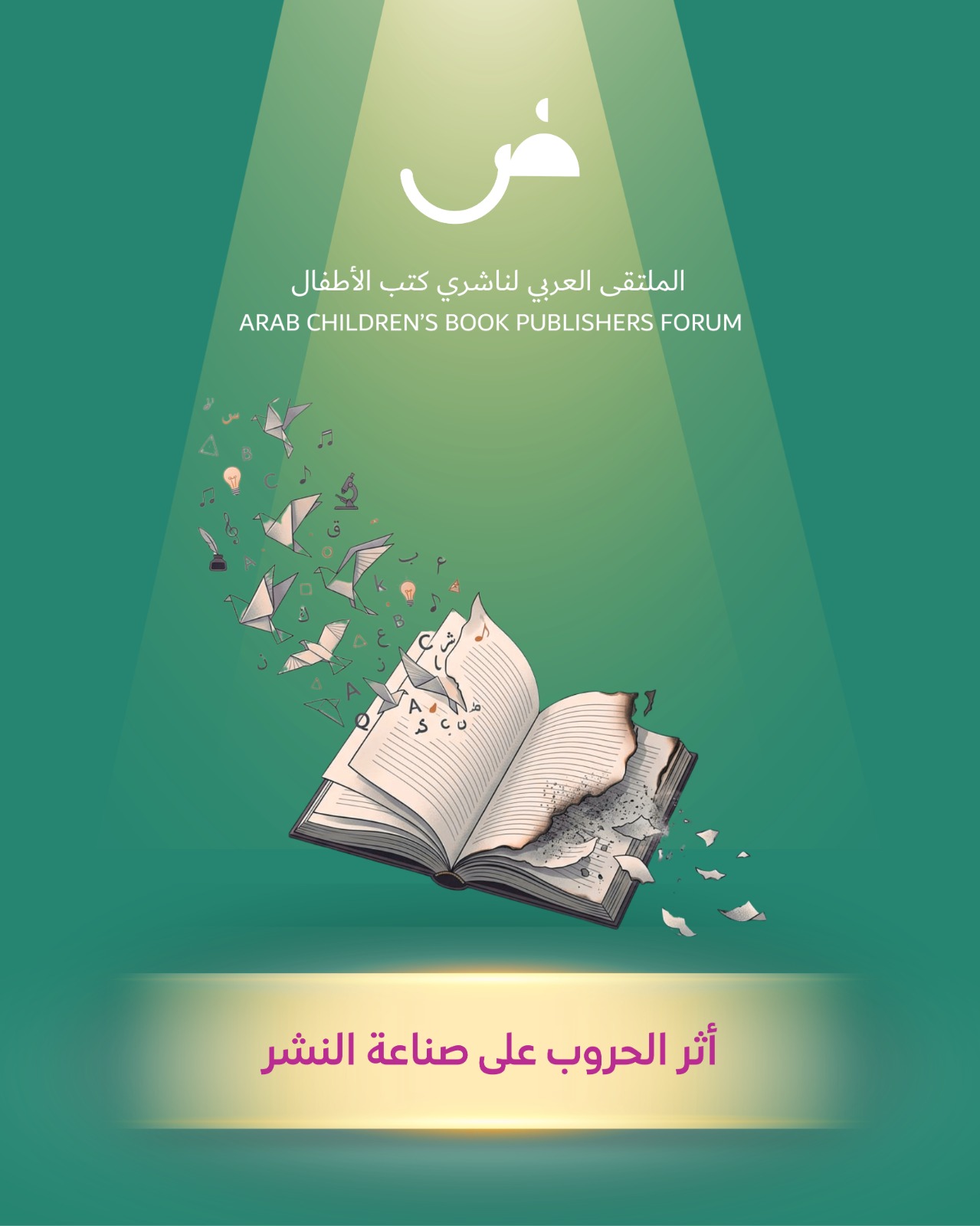
The Impact of Wars on the Publishing Industry
In Times of War, Hope for the Future Becomes Fragile Our world today is filled with knowledge that spreads across every corner of the globe through publishing. Publishing is a precious treasure that encompasses books, magazines, newspapers, electronic articles, and various forms of digital content. These resources help us develop ourselves and shape our future, which is built upon the knowledge and learning we acquire through publishing. Given its significance in our daily lives, it is important to understand how publishing began. The history of publishing dates back to the fifteenth century following Johannes Gutenberg’s invention of the movable-type printing press around 1440. This groundbreaking innovation enabled books and printed materials to be produced more quickly and efficiently, leading to a wider dissemination of knowledge and information. Over the centuries, publishing continued to evolve and expand. Numerous publishing houses emerged and played a major role in advancing the industry. Later, the advent of the Internet brought about a transformative leap, particularly through electronic publishing, which made it much easier to distribute books, magazines, and articles, benefiting countless seekers of knowledge and learning. Despite the remarkable growth and expansion of the publishing industry worldwide, several factors have negatively affected it, with wars being among the most significant. Wars have had a profound impact on publishing in several ways. First, wars often force writers to stop working due to political instability and security concerns. They may become unable to produce their creative works and experience fear, sadness, and despair as a result of displacement and the loss of their homeland. In such circumstances, hope for the future diminishes, and despair can take hold. As security and stability decline, a writer’s passion for creativity may fade, especially when writing itself becomes a threat to personal safety and freedom. This directly affects the writer’s ability to continue producing works that reflect their aspirations and ideas. Second, many publishing houses are forced to close because of shortages in the raw materials required for printing, such as paper and ink. These materials become difficult to obtain due to wartime conditions and rising costs. Furthermore, publishing facilities may suffer damage or destruction as a result of conflict, rendering them unable to continue operating. Together, these factors bring production to a halt and directly affect the availability of books in the market. Third, wars can sometimes destroy internet infrastructure, disrupting the publication of articles and the exchange of information. This negatively affects communication between individuals and institutions and hinders the flow of essential news and information. Such disruptions can limit access to reliable sources, contributing to the spread of misinformation, fake news, and rumors. Fourth, during times of war, publishing is often threatened by strict government censorship imposed on books, newspapers, and magazines. In some cases, authorities may even prohibit the publication of certain works altogether. Such restrictions limit intellectual diversity and literary creativity within the publishing industry, weaken freedom of expression, and reduce opportunities for cultural and intellectual exchange. Finally, it can be said that wars destroy nearly everything, including the publishing industry. They obstruct the very means through which we build a future enriched by knowledge and learning—the knowledge that inspires dreams and ambitions. Many individuals aspire to leave a legacy through books that express their ideas and preserve their names for future generations. Therefore, wars leave a profound impact on the publishing industry by limiting its role in transmitting ideas and facilitating the exchange of knowledge.
Ms. Lamees Mohammed Ali – Sudan - Researcher in Children's Culture
Read More
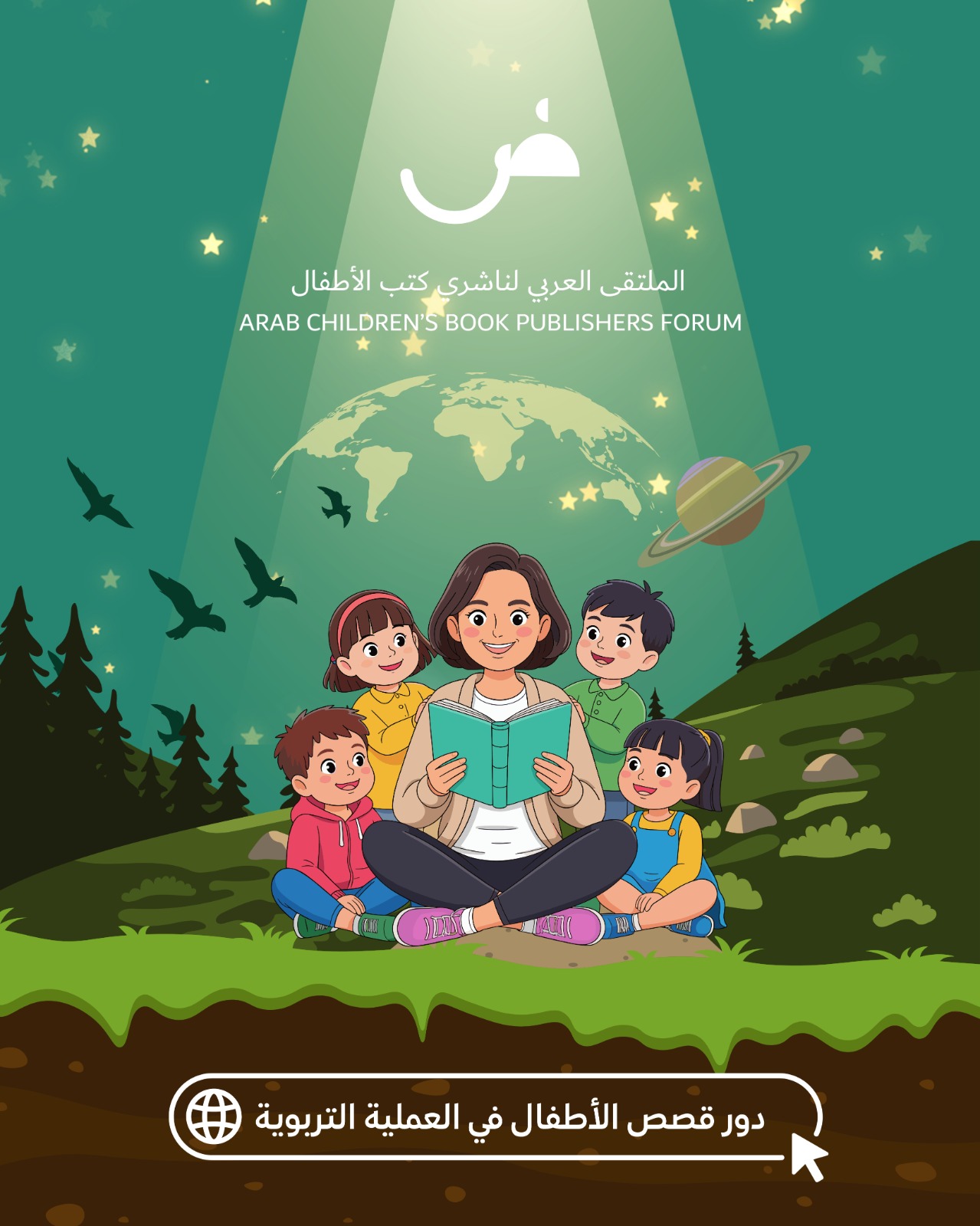
The role of children's stories in the educational process / the story of the writer Selma Lagerlöf as an example
Children get science and knowledge through the school educational system and the educational process in particular, within many changes that occur in their psychological, physical and mental development. It is noticeable that developed and developing countries exerted unremitting efforts to develop children’s upbringing and education, as they are keen on educating them and improving their conducts within a behavioral and developmental methodology based on sound foundations and values in line with the principles and policies of those countries. They also aim at caring about the learner and improving his behavior by intensifying intellectual and cultural details and behaviors within the school curricula. Can children’s stories enhance these details and behaviors in the educational process? The diversity in the audio-visual and sensory knowledge means contributes to the preparation of an integrative curriculum for the child, and the stories have an effective and direct impact on the child’s behavior, its refinement and improvement, in addition to their ability to mix the literary and imaginative side with scientific and historical facts without prejudice to the attractive and enjoyable aspect of story-telling. Stories encourage the child to use imagination, employ creativity and develop his verbal competencies, criticism and listening skills. There are many stories that reinforced and contributed to instilling the concept of education in children and adolescents, since the emergence of children's literature until the present day. We see that children's stories are scientific, religious and historical. Some of the stories aim at instilling lofty values and principles, and some of them enhance the concepts of citizenship and good morals. There are stories that support the scientific and imaginative aspects and others include a philosophical spirit. From the above stories we would mention an immortal global fictional example that was written in an unprecedented miraculous manner in both literary and educational history, which is the book “Wonderful Adventures of Nils”, which was published in 1906 by the Swedish writer, Selma Lagerlöf, winner of the Nobel Prize for Literature in 1909, as she was the first woman to get this prize. Selma started her writing project for this book upon the request of the “National Teachers Association” in 1902, since she intended to write a geography curriculum in which students would overcome the difficulty of this subject and the student would learn about the conditions of his country, Sweden, its wealth, and the diversity of its regions. The writer devoted three years of her life for writing her fictional story grafted with scientific material that included the Swedish regions, their trees, animals, topography and their inhabitants. The writer was not satisfied with all of these aspects, but she was also keen on enhancing her literary masterpiece with legends and folkloric songs to provide scientific material in a funny and exciting way for important age stages in the general national and cultural context of her country. The writer also made a significant linguistic development in her book at the verbal, grammatical and rhetorical levels. The simple story of Nils has shown a sign of transformation at the educational and national level, and the speed of its translation into other languages contributed to an amazing transformation in the educational process and the Swedish folklore at that time. The popularity of this book did not stop at this point, as it was turned into animated films which adults enjoy watching before children. Hence, we find out that stories have a prominent and pivotal role in the interactive, cognitive and educational development of the child if the appropriate standards for creative writing are exploited, away from direct indoctrination.
Heba Mandani - Kuwait
Read More
Translating and Publishing Children's Books
The subject of translating children's books has attracted growing interest among publishers and remains a recurring topic at cultural forums, particularly in events accompanying book fairs. This interest reflects several contemporary developments, most notably the unprecedented cultural openness brought about by globalization. Today, English and French are no longer the sole sources for children's literature translation. Other languages, including Chinese, Japanese, Hindi, and even several Latin American languages, have entered the field. These works have found their way into the Arab world through various channels, including modern digital technologies that have helped publishers discover new opportunities in international children's publishing. As this promising field continues to expand, an important question remains at the forefront of discussions among children's book publishers: What is the best approach to translating children's books into Arabic in a way that achieves the desired objectives? Answering this question requires careful consideration of several key factors. Which Book Should Be Translated? The first challenge facing children's publishers is selecting the right book. Not every children's title published in another language is suitable for Arab children. Winning an international award does not automatically qualify a book for translation, as many works are deeply rooted in the cultural systems of their original audiences. Publishers may encounter values, perspectives, or treatments of certain topics that do not align with the cultural context of Arab children. Therefore, careful selection remains the first prerequisite for a successful translation project. Leading children's publishers often maintain written guidelines and protocols to regulate the selection and translation process. The Professional Translator Once a title has been selected, the search begins for a qualified and professional translator. The translator is the cornerstone of the entire process, and their cultural knowledge, linguistic expertise, and literary sensitivity are crucial factors in the success of translated works. Many successful Arabic translations produced during the twentieth century owed their excellence to pioneering translators who were themselves writers, poets, and gifted literary figures. Their work resonated with generations of young readers. Today's translators face the challenge of continually developing their skills and keeping pace with the rapidly evolving publishing and translation landscape. Translation Strategy Children's books often contain symbols, names, customs, and cultural references that may affect how young readers engage with the text. This raises important questions regarding translation strategies and the degree of flexibility allowed when adapting content. Some authors and publishers insist that their texts remain unchanged, rejecting any modifications at the linguistic or cultural level. Consequently, publishing agreements should clearly define the extent to which adaptations are permitted when translating children's and young adult books. Publishing houses should also establish clear procedures identifying who is authorized to make editorial adjustments when necessary. Multiple Translations Another important consideration is determining whether a book has already been translated into Arabic or other languages, and whether translation rights are exclusive or available for additional territories. Major publishers may license translation rights on a regional basis, while others focus on language-based rights. Given that the Arabic language serves readers across twenty-two Arab countries, publishers must carefully assess rights agreements. Multiple translations of the same work can also create confusion among readers, a phenomenon that has occurred with numerous literary titles. Illustrations and Characters Experience has shown children's publishers that illustrations and characters play a vital role in children's books, especially during early reading stages. An important question concerns the publisher's ability to adapt visual elements to suit the cultural environments in which the translated book will be marketed. Critics have often highlighted the issue of transferring illustrations and scenes exactly as they appear in the original editions. Children are naturally more attracted to familiar environments and characters that resemble their own experiences. As the saying goes, "Like is drawn to like." Conclusion Translation remains one of the most important avenues for creativity, renewal, and cultural enrichment in children's publishing. It should remain open and active in order to continuously introduce fresh ideas and perspectives to young readers. When children's publishers address these considerations comprehensively rather than individually, they increase their chances of producing outstanding translations that enrich the Arabic children's library and provide meaningful added value for future generations of readers.
Prepared by the Editorial Department of the Arab Union of Children’s Book Publishers.
Read More
Grandmothers’ Tales and Children’s Literature
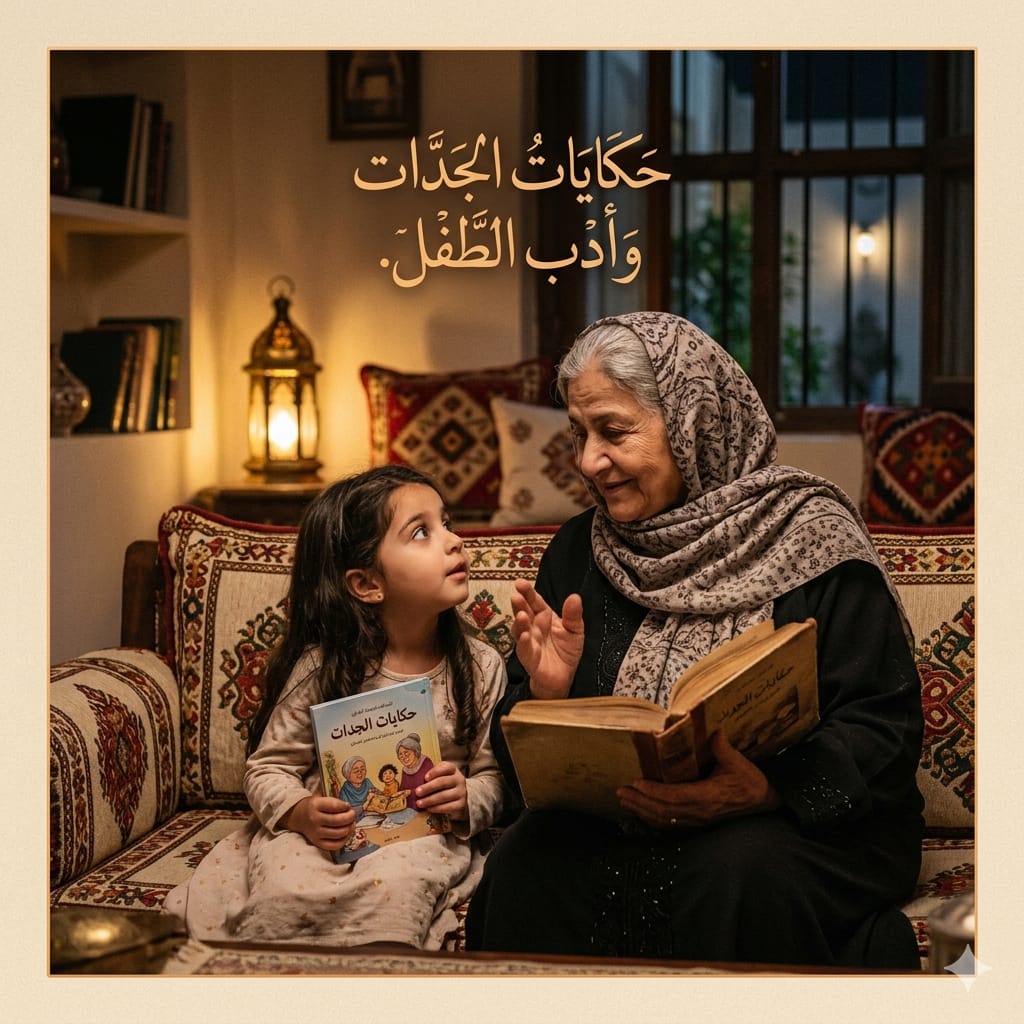
Grandmothers’ Tales and Children’s Literature Children’s literature, as we know it today in its written and printed form, did not emerge overnight. Like all other forms of literature, it passed through many stages before reaching its current shape. Storytelling was considered the very first and most important stage, especially because writing stories and preserving them in written form was once difficult. Therefore, oral narration became the easiest and most complete way to preserve and share stories. Storytelling methods varied from one storyteller to another, even when the main elements of the story remained the same. The style of narration often depended on the atmosphere and emotions the storyteller wished to convey to listeners. The storyteller usually aimed to deliver educational, moral, heroic, or historical messages, while emphasizing certain events or values. Sometimes storytelling included gestures and movements, while in many cases the narrator relied solely on the spoken word. As time passed, storytelling methods evolved. To attract children and provide more entertainment, enjoyment, and participation, storytellers began using puppets and moving dolls to represent different characters and bring stories to life. Despite these additional tools, the storyteller never abandoned the essential role of oral narration, changing the tone of voice between strength, softness, and kindness to suit each character being portrayed. In the beginning, storytelling was not considered a profession. Anyone with the ability to narrate events in an engaging and attractive manner could become a storyteller. Such individuals possessed the talent to present details in a captivating way that kept listeners eager until the end of the story. Over time, however, storytelling became a profession. Traveling storytellers emerged, searching for the best stories—whether ancient or contemporary—to share with children. This required constant travel and continuous training in entertainment and communication skills to attract larger audiences. Storytellers eventually had scheduled gathering times that children awaited with excitement and affection. Besides their ability to attract attention and directly influence children, storytellers were often characterized by kindness, honesty, tenderness, and credibility. In the absence of professional storytellers, grandmothers took on this important role. They narrated stories in ways very similar to traditional storytellers, but with a stronger educational and moral purpose. Through storytelling, grandmothers focused on teaching values, emphasizing goodness, and presenting stories with sincerity and emotional impact. Their tales often highlighted positive lessons and noble qualities that distinguished grandmothers’ storytelling throughout history. Despite the passage of time, changing eras, and the dominance of modern technology, grandmothers’ tales have not lost their essence. Grandmothers still tell stories in the same familiar and heartfelt way practiced for generations. What unites them all is a shared purpose: building balanced generations filled with noble values and positive qualities. Through charming and meaningful storytelling, grandmothers preserved the beauty of the past and passed it on to their grandchildren, ensuring that these timeless stories remain rich in elegance, depth, and authenticity. These tales come from loving hearts that strive to pass on the very best of earlier times in order to shape bright and promising future generations.
Dr. Shahinaz Aqabawi
Read More
Publishing and Distribution Challenges
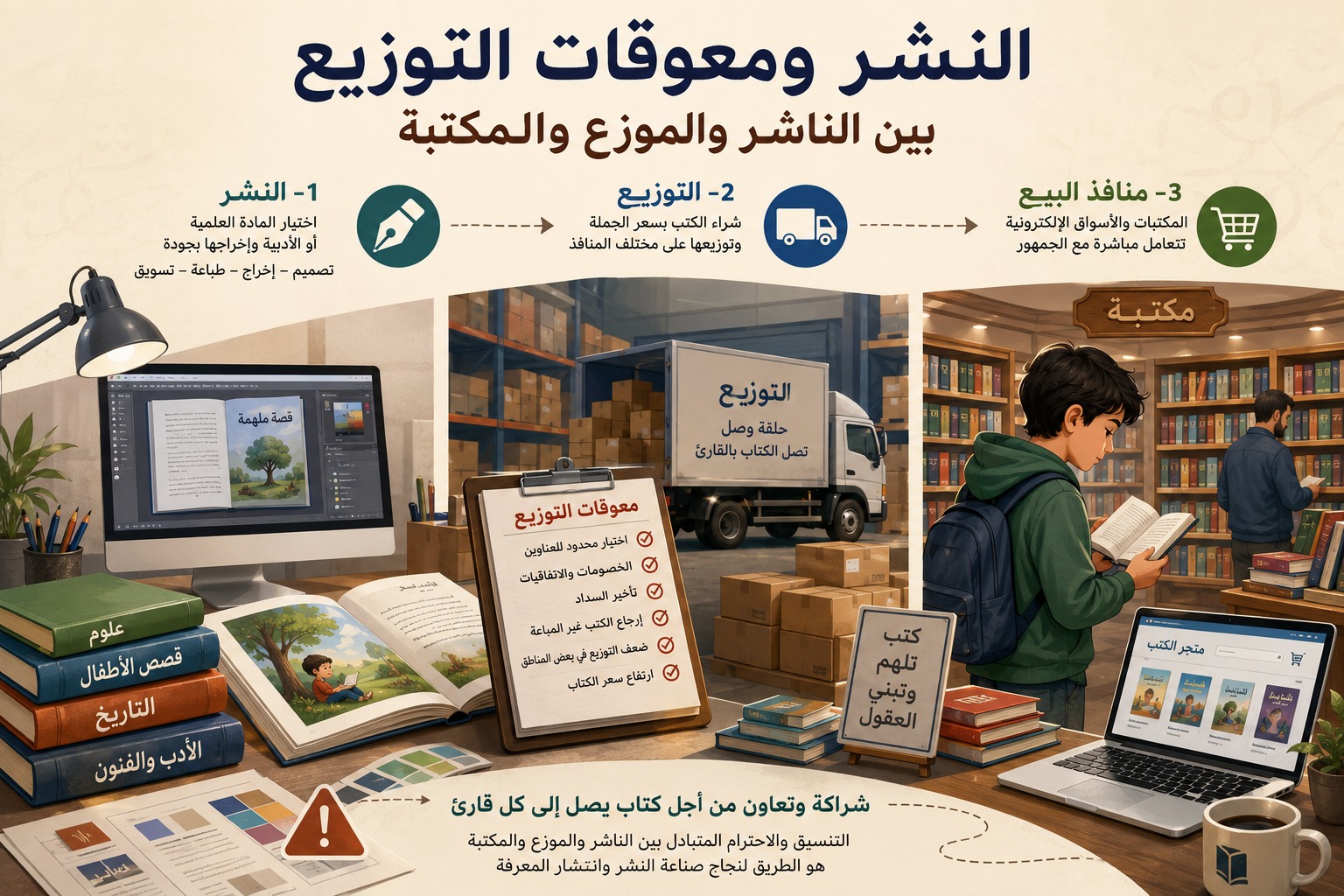
Publishing and Distribution Challenges The profession of publishing and distributing books, in all their forms, is considered one of the noblest industries and professions. It not only provides knowledge, culture, and literature — a continuation of the mission of prophets and messengers — but also engages with minds and seeks to nourish them with diverse sciences and ideas. Publishing houses constantly interact with scholars, thinkers, writers, students, and readers. The publishing industry is divided into three important stages before a book reaches readers or markets. The first stage is publishing itself, which includes selecting the scientific or literary content and presenting it in a form that reflects the publisher’s identity and suits the reader or audience. This stage also involves design, layout, printing, and marketing. The second stage involves distribution companies, which purchase books wholesale from publishers and then distribute them through various outlets such as public and private bookstores, as well as online stores. The final stage is sales outlets or bookstores and online marketplaces, which deal directly with the public through sales. Sometimes these stages overlap; some publishers may handle distribution themselves, while some distributors may sell directly to consumers. Each stage has its own advantages and challenges. Publishing houses choose authors, manuscripts, printing methods, and layouts, then manage marketing, pricing, and distribution channels. One of the major challenges publishers face is that they cannot force distributors to carry all their titles. Distributors often select only certain books based on their own preferences and market vision. As for distributors, they may not participate in selecting the content or bear production costs such as authors’ fees, design, printing, or marketing expenses. Instead, they choose titles they believe suit their business interests. In many cases, distributors pressure publishers regarding pricing, discounts, and display methods while focusing mainly on distribution efforts. Some distributors require books to be supplied on a consignment basis, meaning payment is only made for sold copies, while others reserve the right to return unsold books. Distribution challenges also arise because distributors do not control the content, authors, or production quality, in addition to their limited influence over book pricing set by publishers. Bookstores, on the other hand, benefit from direct interaction with readers, allowing them to gather genuine feedback about books. However, they also face difficulties, including limited shelf space, the vast number of titles available, multiple editions, varying prices, and differing discount rates offered by publishers. Focusing on the relationship between publishers and distributors, publishers are expected to dedicate themselves to selecting quality works, collaborating with authors, illustrators, and designers, and overseeing printing, production, marketing, and fair pricing to ensure sustainability. Yet, a major issue remains: many distributors view publishers primarily as profit-driven businesses without fully appreciating the challenges publishers themselves face. Many distributors insist on exclusive agreements that prevent publishers from distributing through other channels, while still reserving the freedom to select titles, quantities, and supply contracts for government tenders and institutions. This reduces publishers’ ability to showcase all their products freely. In some regions, weak distribution networks also limit book availability, and sometimes distributor profit margins exceed those of publishers, resulting in higher book prices and reduced accessibility. Personal relationships can also influence dealings between distributors and publishers. Some distributors prefer working with publishers that offer larger discounts or maintain favorable relationships with distribution managers. Additionally, distributors may delay payments until they receive funds from bookstores or marketplaces, which in turn delays payments to publishers. Ultimately, the relationship between publishers and distributors is a strategic partnership built on cooperation and coordination to achieve success. Overcoming these challenges and improving collaboration can help both parties achieve shared goals and reach wider audiences.
Mr. Adel Abdel Samea
Read More
Where Are the Bestselling Children’s Books?
Where Are the Bestselling Children’s Books? One cannot fail to notice the significant gains that Arab children’s books have achieved over the past two decades. This field has witnessed growing awareness, culminating in the emergence of numerous specialized publishing houses and professional entities. Children’s publishing has become an increasingly independent sector, which has encouraged the rise of many related activities and events. It is worth noting that initiatives aimed at drawing attention to books are experiencing remarkable growth, especially in developed countries. These initiatives have introduced various innovative methods, including reading competitions, highlighting a specific book, or focusing on a particular category of books such as announcing bestsellers, most popular books, or most widely circulated titles. All of these serve as incentives that spark a love of reading and encourage book purchasing. Such initiatives have played a major role in attracting readers and intellectuals. Through the spotlight on a specific book, readers can be guided toward a broader engagement with publishers’ catalogs. This is considered an advanced practice that deserves recognition and support. These pioneering experiences are also worth adopting, as there is nothing preventing children’s book publishers from applying them in ways that suit their capabilities and local context. Here, the role of forums, publishers’ unions, and reading associations becomes essential, as these institutions can effectively contribute to organizing such emerging practices in gradual forms. For example, they could launch an initiative for “Bestselling Children’s Books” during specific book fairs such as the Sharjah Children’s Reading Festival or other Arab book fairs. They could also organize events under the theme “Most Popular Children’s Books,” based on the availability of selected children’s books in a particular library or a network of libraries. Initiatives focusing on popular books, in their various forms, provide researchers with highly valuable data. They help identify children’s reading preferences for specific types of books, whether during a particular season or period. Such statistics also enable more accurate studies on readership, reading patterns, and comparative analyses. What encourages the adoption of such ideas in the children’s publishing sector is the flexibility that allows multiple implementation options. However, the most important factor is the consistent effort to provide the necessary data, which is not difficult to obtain. It can be gathered from publishing lists available with publishers and associations. Once this is achieved, the opportunity becomes ripe for organizing such innovative and dynamic initiatives, which can further be developed through careful evaluation and continuous improvement of the experience.
Prepared by the Editorial Department of the Arab Union of Children’s Book Publishers.